Hello and welcome to the 2026 BarthHaas HopUpdates!
Harvest Germany
The hop harvest will come to an end in all German hop-growing regions in the coming days. Due to the expected low yield, the harvest season on farms is shorter this year. Currently, the Herkules variety is still the main variety being harvested. Summer-like temperatures prevailed during the harvest, with scattered light rainfall.
Yields for the aroma varieties Perle and Hallertauer Tradition are disappointing and remain at a below-average level. Yields for Herkules, the variety with the largest growing area, are also below average to well below average. The first alpha values for Herkules are also at a very low level.
We currently expect the harvest volume in Germany to be 33,330 tons. This would fall significantly short of the official harvest estimate of 41,235 tons.
In terms of diseases and pests, the aromatic varieties show good external quality. Toward the end of the growing season, late-maturing varieties such as Herkules experienced pest pressure from red spider mites and downy mildew in susceptible locations.
The other German growing regions, Tettnang and Elbe-Saale, are also characterized by lower yields and alpha values.
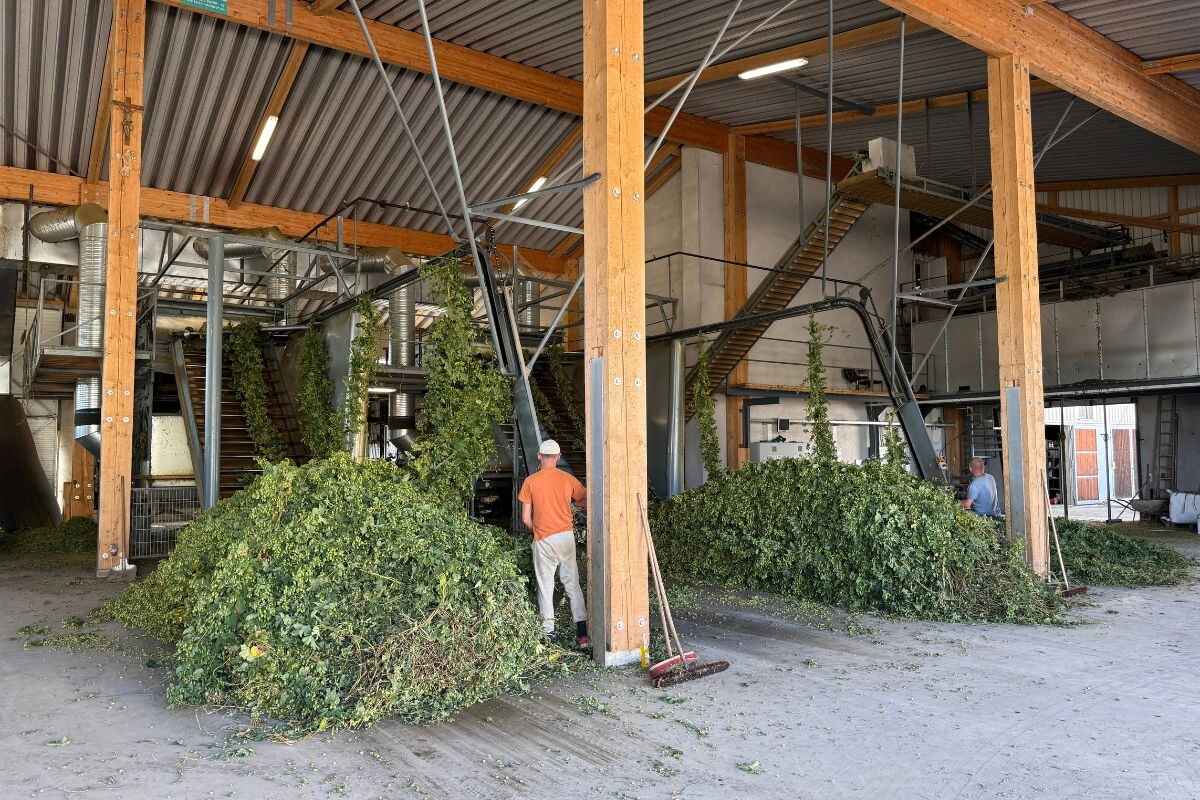
Abb. 1: Harvest Hallertau
Harvest in other growing areas
Czech Republic
The harvest in the Czech Republic has been over for several weeks now, and the hop fields have been cleared. Unfortunately, the heat wave shortly before the harvest significantly reduced the previously average yield estimate. The Saaz variety, which dominates in terms of acreage, was particularly hard hit, with serious negative impacts on both yield and alpha production.
This is now reflected in the harvest results, particularly in alpha production per hectare. The average yields for the Saaz variety are approximately 925 kg/ha, which is about 300 kg/ha and 23% below the long-term average. For the growing area, this results in an estimated total harvest of approximately 5,300 tons, of which 3,700 tons are attributable to the Saaz variety and 1,450 tons to all other varieties.
Slovenia
An extraordinary growing season is also coming to an end in Slovenia; the harvest is complete. Due to repeated hailstorms — as had already been anticipated in early July — many damaged hop crops were unable to develop sufficiently, leading to significant yield losses across the entire growing region. As of now, the total harvest is expected to be approximately 1,250 tons, which represents a reduction of nearly 50% compared to last year’s harvest. The greatest losses are expected for the two varieties Celeia and Aurora.
Due to several heat waves and high temperatures, the alpha acid content of all varieties is also below average. It is noteworthy that, despite the difficult harvest conditions resulting from the hail-damaged hop bines, good to very good quality is expected from the growing region.
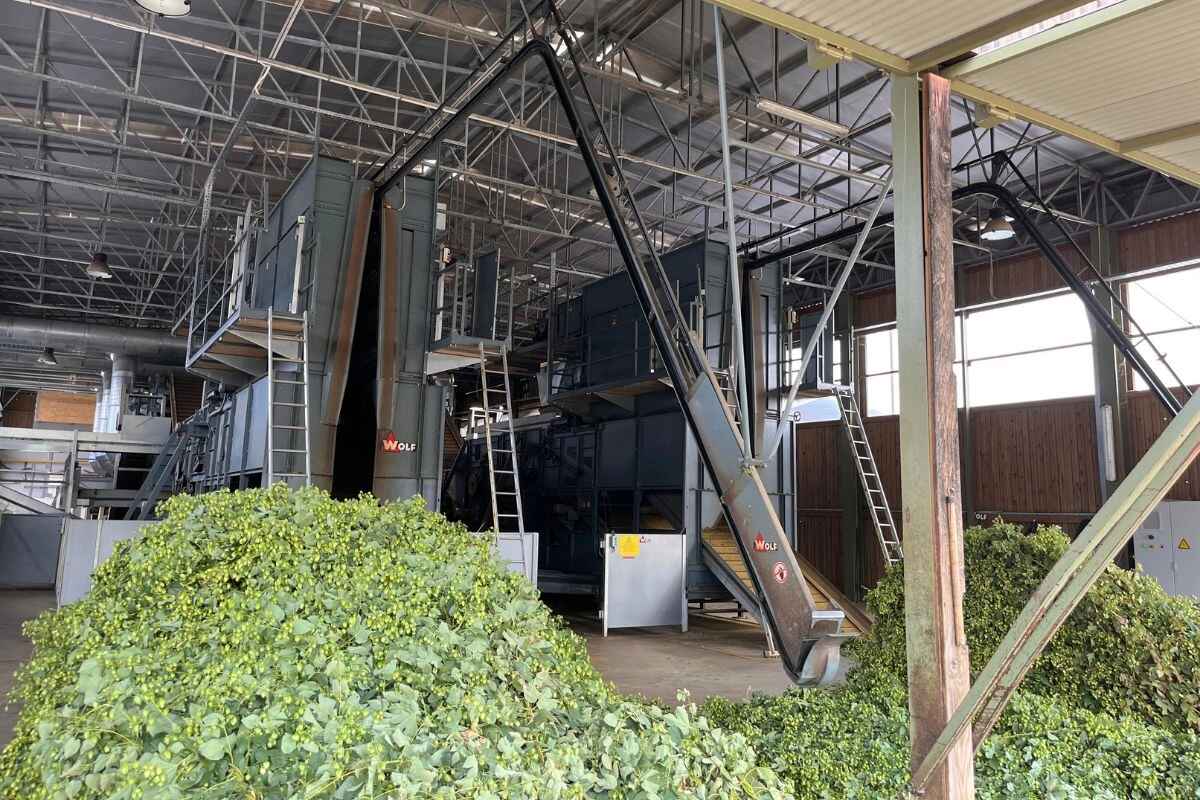
Abb. 2: Harvest Slovenia
Poland
Most Polish hop growers are currently in the midst of the harvest; they have already finished harvesting early varieties such as Lubelski and are now harvesting high-alpha varieties like Magnum and Magnat.
Unfortunately, lower yields are also expected for the Polish varieties, as rainfall has been scarce due to the Europe-wide droughts. Aroma varieties are more severely affected, although bitter hops will also fall below long-term average yields. It remains difficult to estimate the total harvest volume, but it is expected to be around 2,500 tons. Initial results regarding alpha acid content suggest that levels will be below average.

Abb. 3: Harvest Poland
USA
The harvest in the American growing regions of Yakima, Idaho, and Oregon is also coming to an end and will be fully completed in about a week. With a projected production of approximately 38,000 tons (including non-PNW), a slightly above-average harvest can be expected across all U.S. growing regions.
Overall, above-average alpha production can be expected in the U.S. This is primarily due to the expansion of acreage planted with predominantly new high-alpha varieties. These varieties often yield high yields while maintaining high alpha acid content.
Even after this season, reservoir levels remain extremely low. As was the case last year, sufficient snowfall and rainfall in the mountains are now necessary to continuously replenish the reservoirs with water throughout the coming growing season.

Abb. 4: Harvest USA
Impact of the 2026 Harvest on Yield and Alpha Content
European hop-growing regions, in particular, must expect significant losses in yield and alpha content from this harvest. The high number of hot days and low precipitation levels throughout the entire growing season have turned this record-breaking summer into a “record-breaking bad year” for hops.
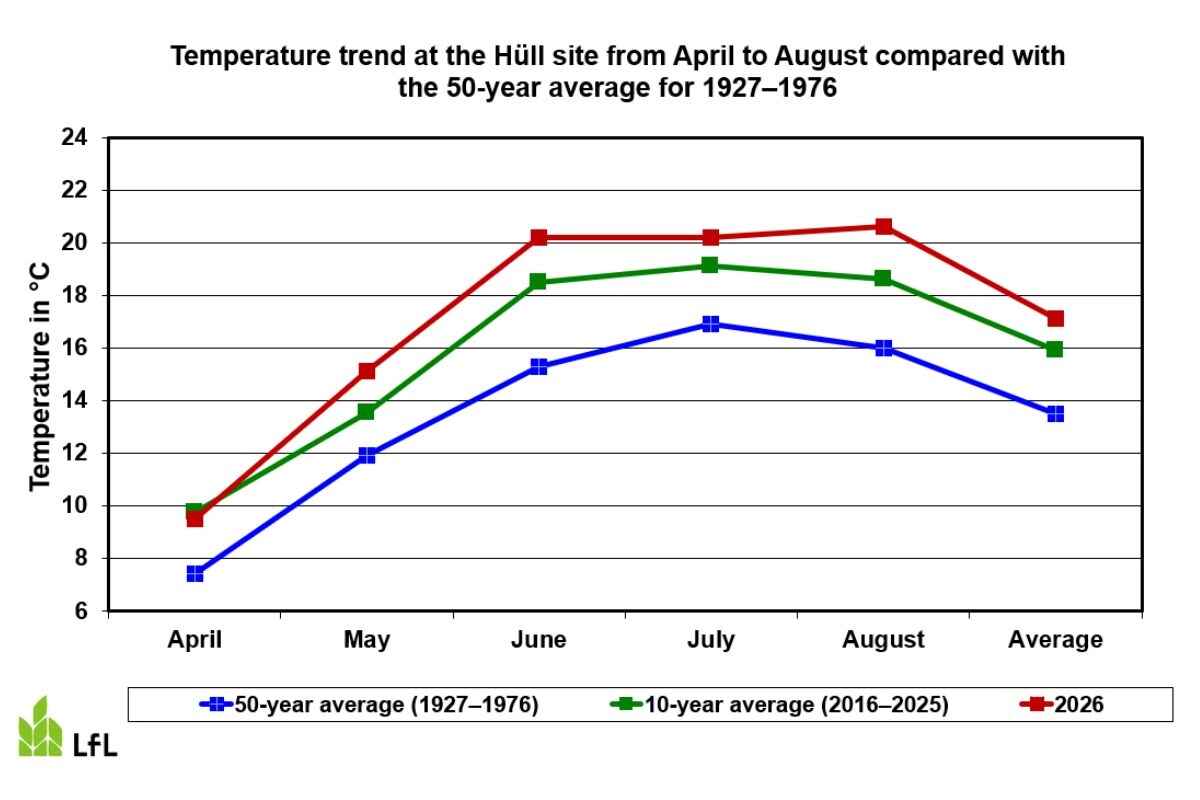
Abb. 5: Temperature
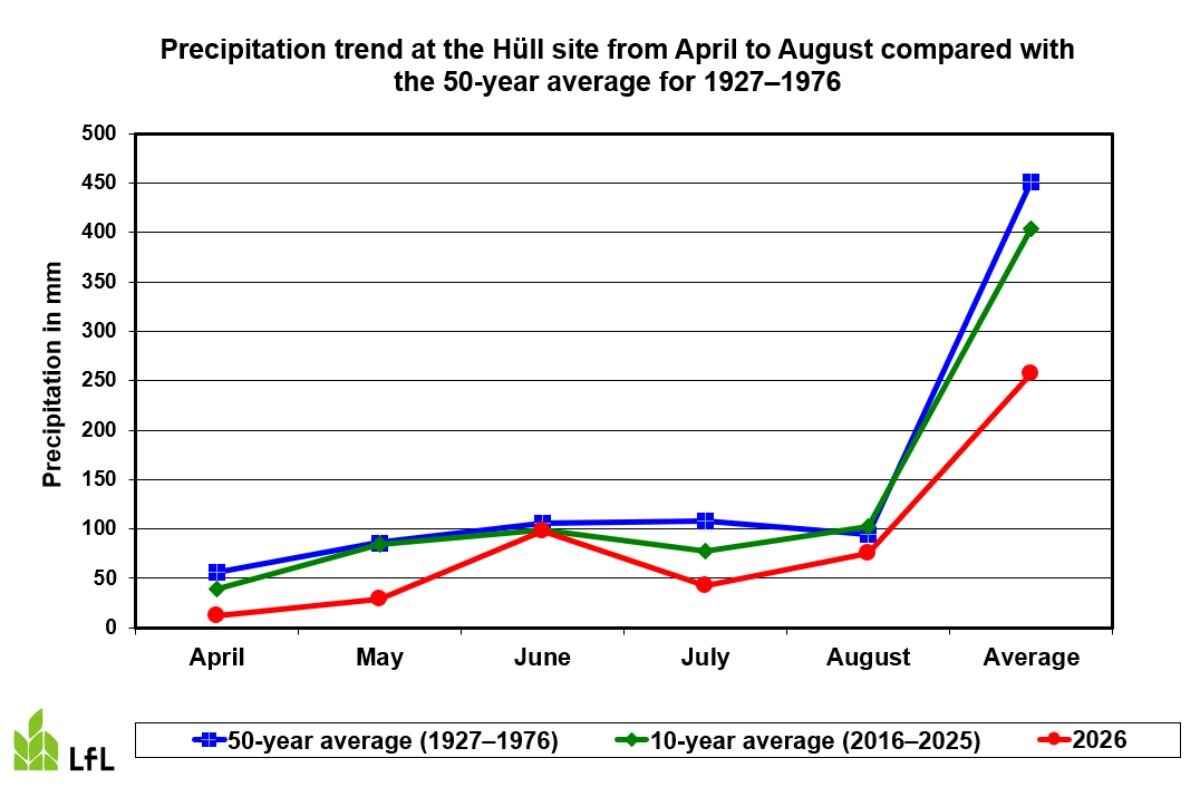
Abb. 6: Precipitation
To put this development into perspective, the alpha yields in kilograms of alpha per hectare for the past five years are presented below for three selected varieties as examples. Since the 2026 harvest has not yet been fully evaluated, a preliminary estimate is used for the current harvest year.
The chart shows that alpha acid production over the past five years has been predominantly well below the 10-year yield average. Heat waves and droughts in European growing regions are becoming more frequent, and the hop industry must face this challenge. In addition to adapted production techniques and the establishment of irrigation systems, the brewing industry must also support the transition to more climate-resilient hop varieties. The new varieties from European breeding programs—such as Tango, Hüll Classic, Titan, as well as Sladek, Saaz Comfort, and Saaz Shine—are demonstrating their yield and alpha stability, particularly in the 2026 harvest year.
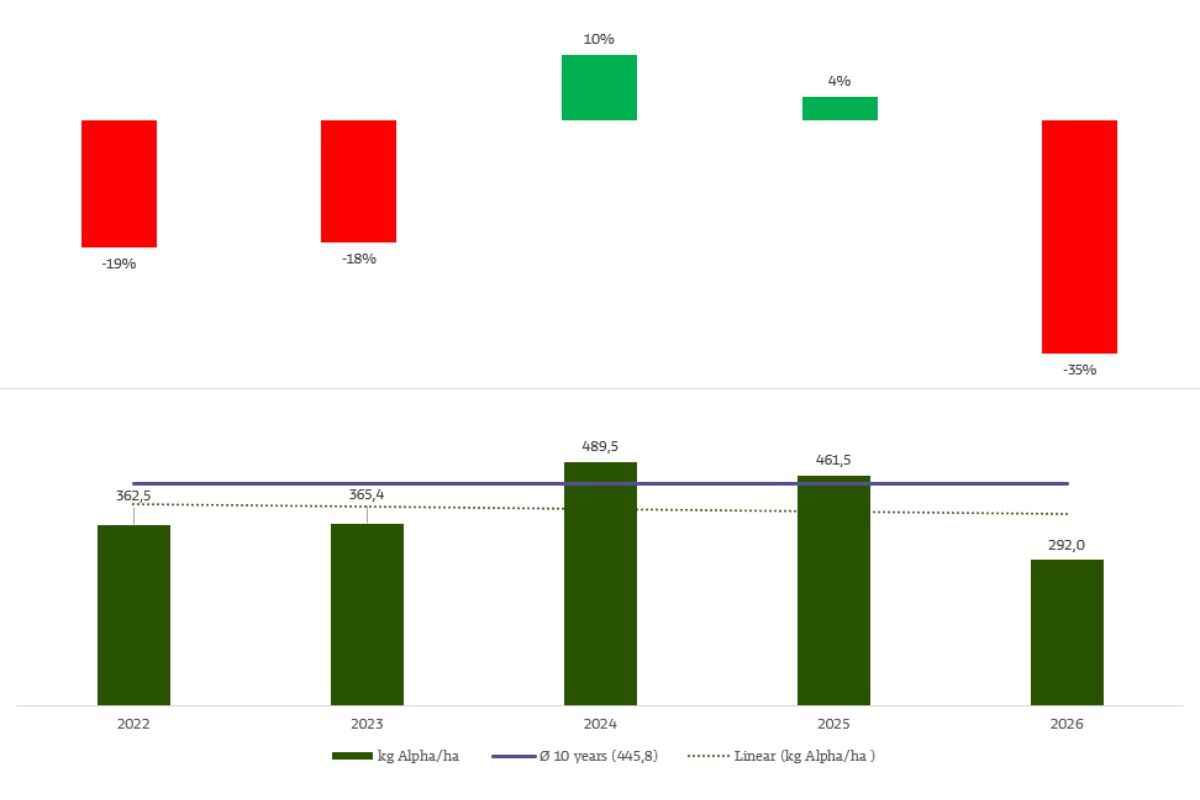
Abb. 7: Herkules
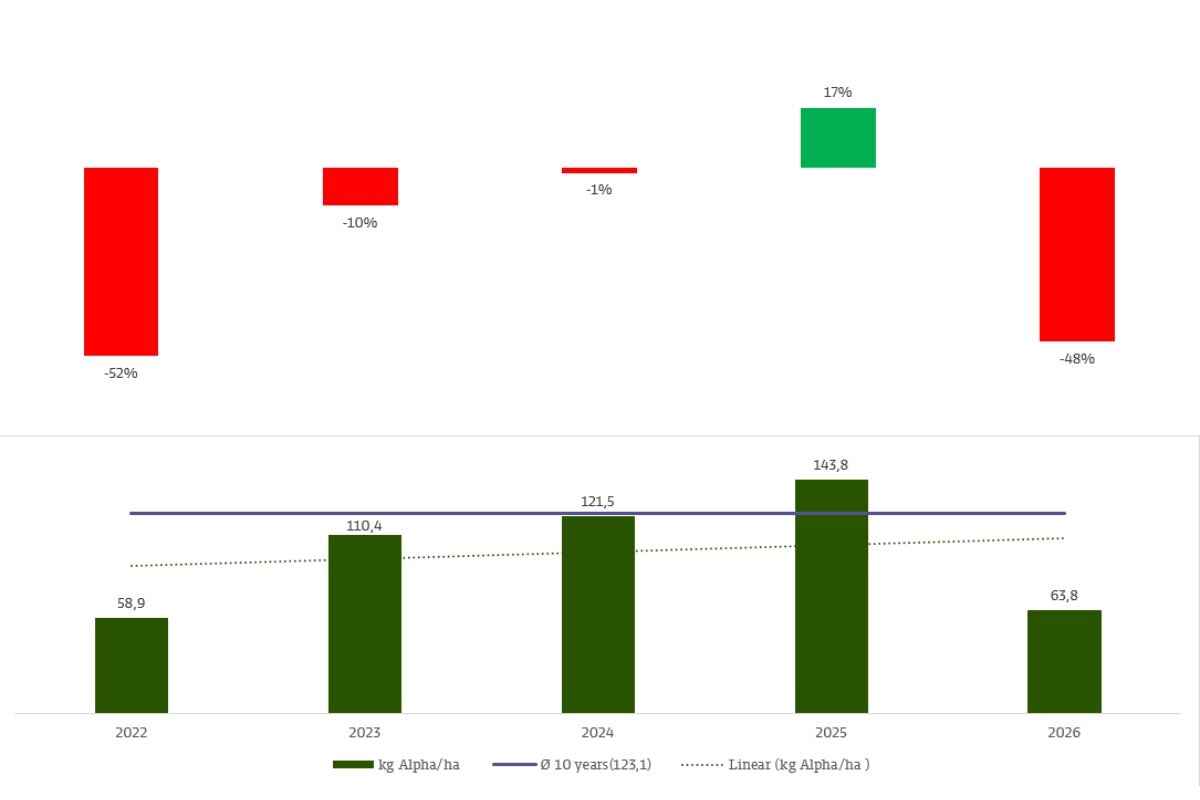
Abb. 8: Perle
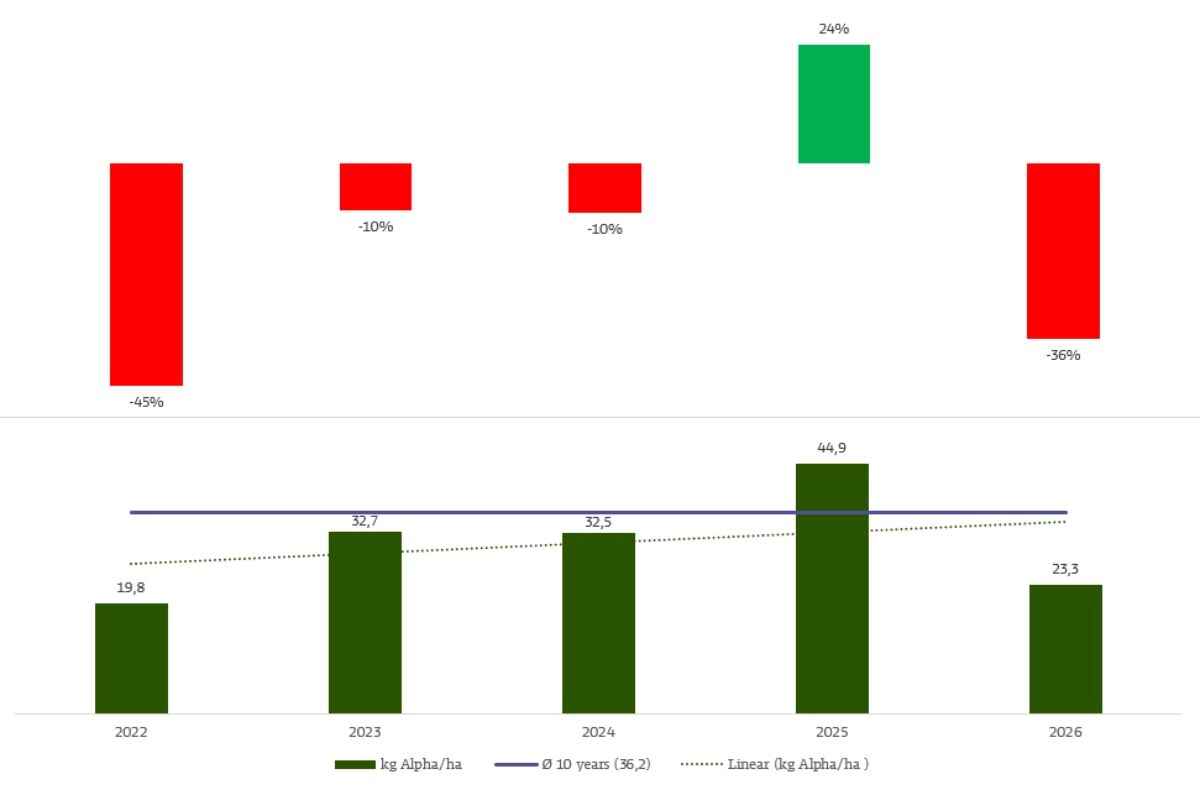
Abb. 9: Saazer
Source: BarhHaas (https://www.barthhaas.com/ressources/blog/blog-article/hop-update-september-2026)